

When replacing your notebook battery, cheap online offers may be tempting. But behind these inconspicuous bargains, counterfeit or illegally imported batteries may be hiding. These can not only impair performance but also pose serious safety risks such as overheating, fires, or data loss. Learn what to look for when purchasing to optimally protect your device and your safety.
Two Practical Examples from Our Service Experience
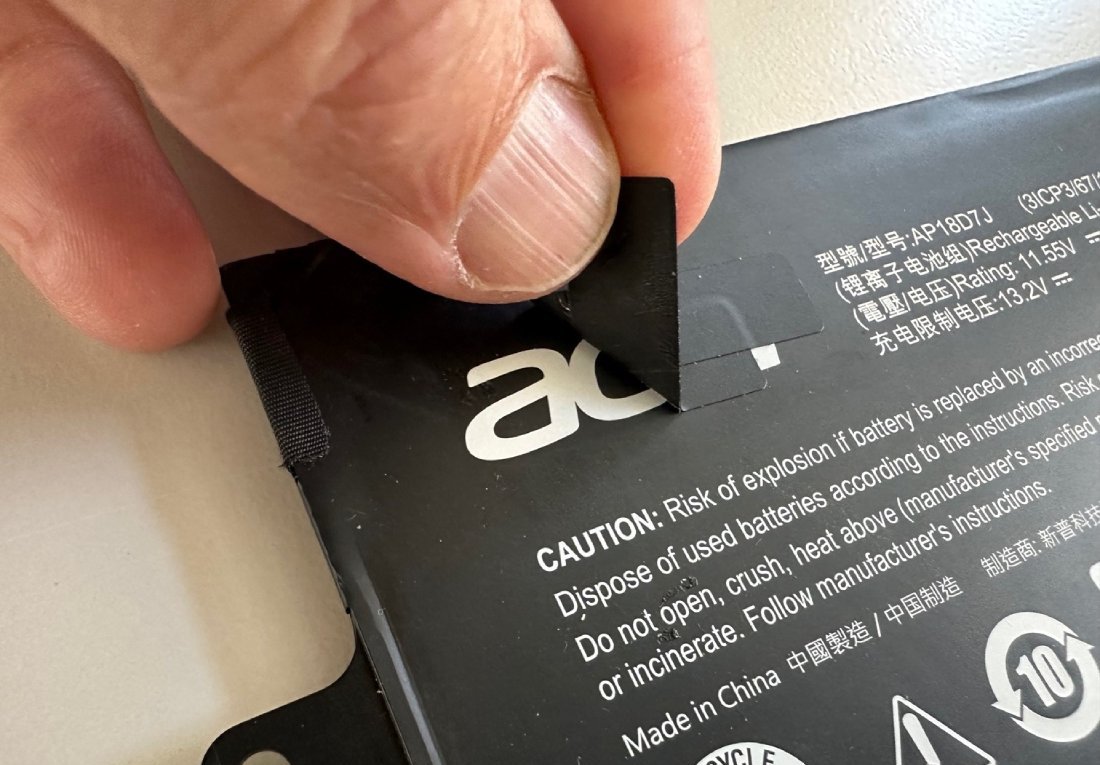
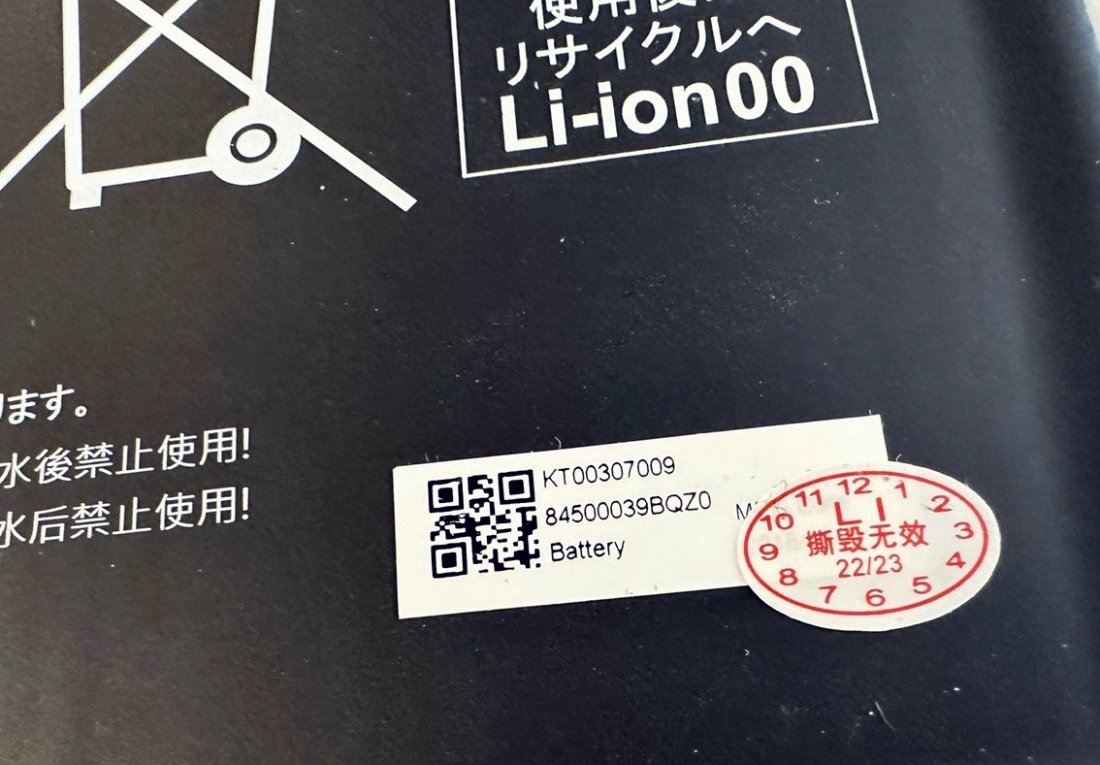
1. Counterfeit Acer battery with taped-over brand logo + warranty seal from Chinese manufacturer.
An Acer notebook had a battery installed whose logo was covered with a sticker. The serial number was missing and the security seals were counterfeit. In use, the battery failed after just a few weeks and became hot—a dangerous condition!
2. Counterfeit HP battery with manipulated label:
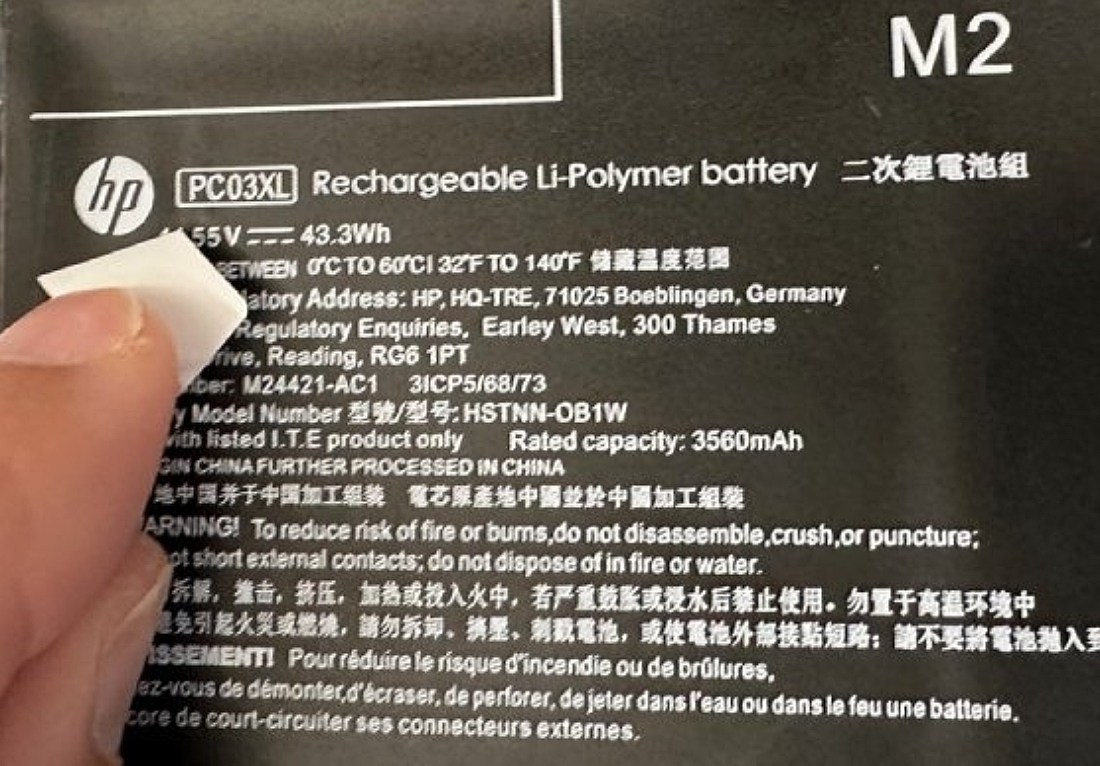
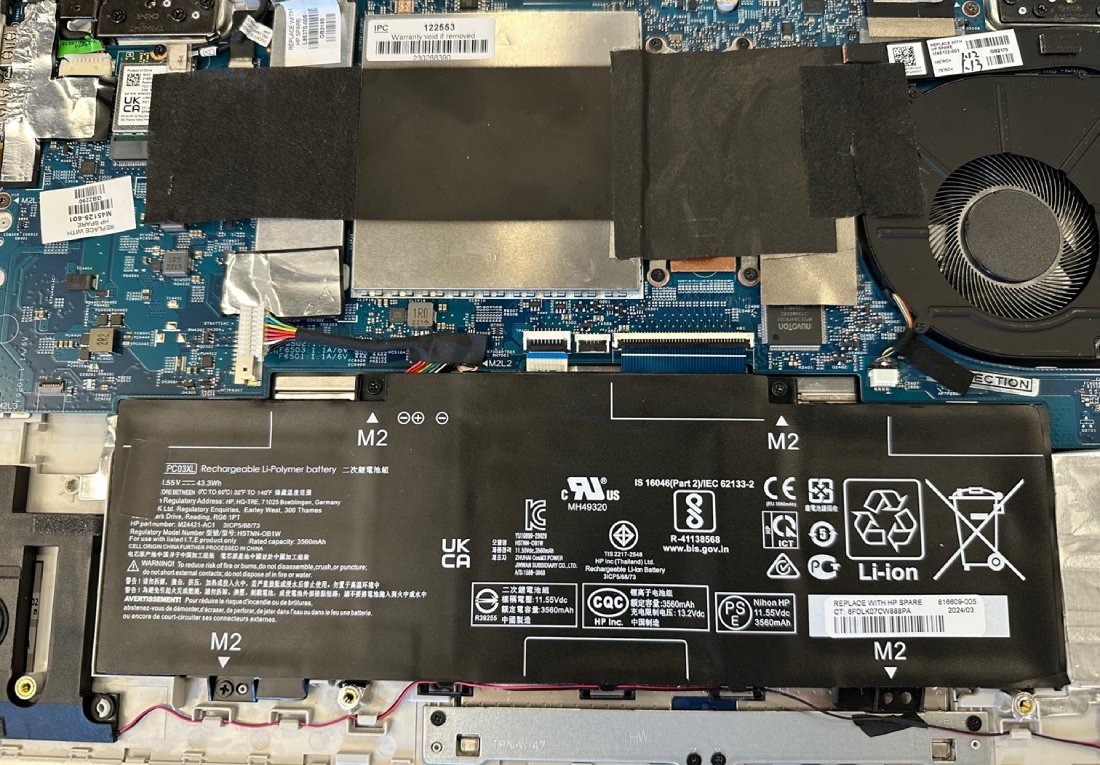
Counterfeit batteries also keep appearing in HP notebooks. In this case, the label was hand-applied and differed significantly from the original in details (font, color, placement). Possible reason: This was meant to deceive customs during import. Testing revealed: The battery delivered inconsistent voltage and was defective after a short time. A risk to the notebook and user safety!
Why Are Counterfeit Batteries So Dangerous?
Counterfeit or illegally imported batteries often look like originals at first glance.
The problem: The battery nameplates show higher watt-hour ratings (Wh) than there are actually present in the battery.
What this means: These batteries have worse performance, run out faster, and are therefore less reliable. You could say the battery is a deceptive package.
Additionally, the cell manufacturer information and production date on the nameplate differ from the actual data in the battery BIOS. This significantly increases uncertainty regarding the quality and safety of these batteries.
Both affected batteries pose significant safety risks that could, in the worst case, lead to device damage or even danger to users. Of course, we immediately informed the affected Acer and HP customers about the situation and explained the potential risks.
Here’s why you should be especially careful when buying batteries:
Fire and explosion hazard: Original batteries undergo strict safety testing and have protective mechanisms against overheating and short circuits. Counterfeits often omit these safety features. This causes the batteries to overheat, catch fire, or even explode—especially dangerous when your notebook is in the living room or bedroom.
Short lifespan and device damage: Cheap cells wear out quickly, lose performance, and in the worst case can damage the entire notebook.
Loss of warranty: Using unauthorized batteries can result in losing your manufacturer’s warranty and being stuck with the costs in case of damage.
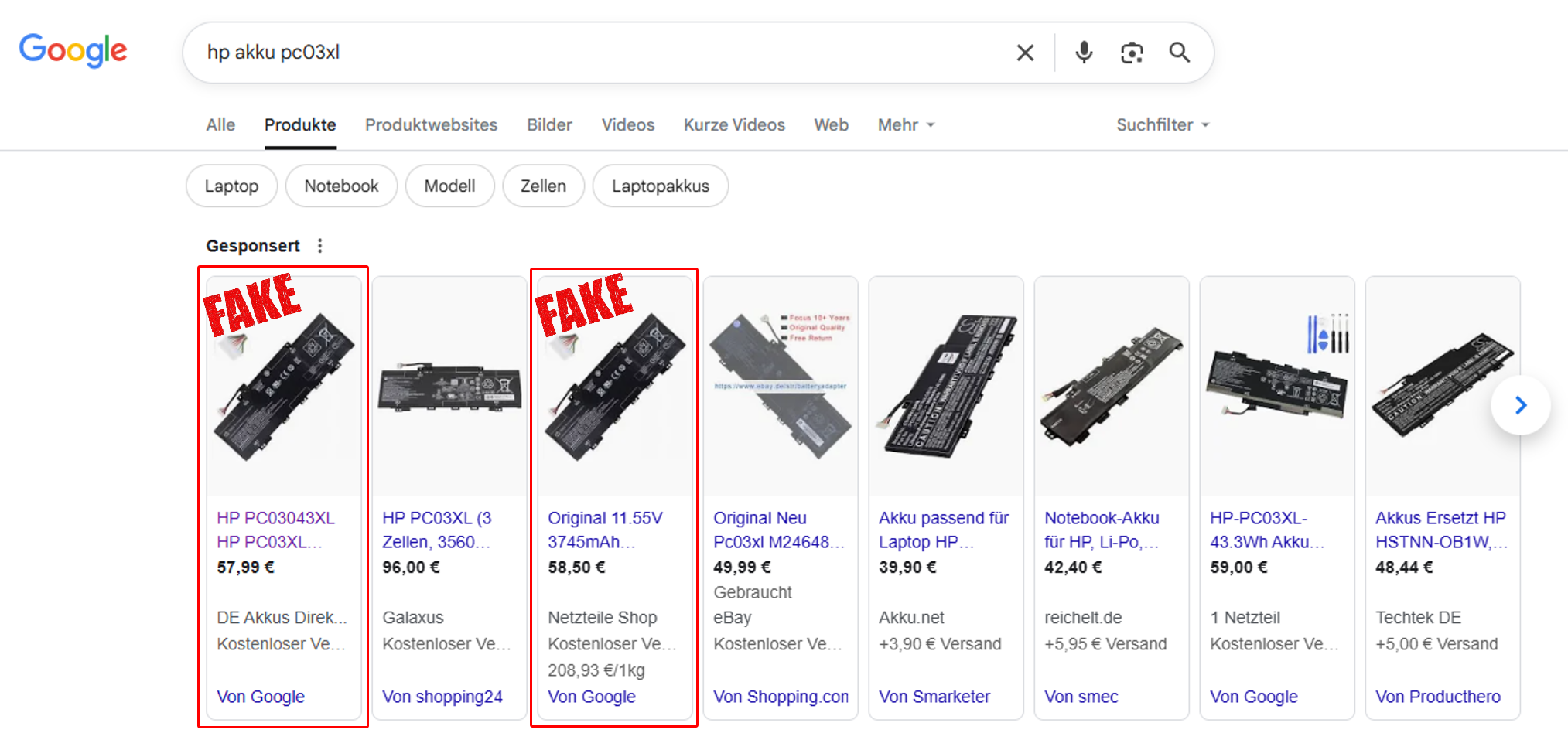
Warning: At "PCAkkusdirekt.de" you're not buying original products!
Warning: 1st link and 3rd link are fake shops (marked in red)!
What Can You Do as a Customer?
Only buy from trustworthy retailers: Directly from the manufacturer, from certified specialist dealers, or authorized service partners such as: www.ipc-computer.eu
Pay attention to details: Is the labeling correct? Are the serial number and security seals present? Is the packaging original?
Ask if unsure: Contact the manufacturer if in doubt. Acer, for example, offers verification.
- HP also offers authenticity verification. Click here: https://www.hp.com/us-en/cartridge/anti-counterfeit.html
Conclusion:
Better Not to Cut Corners in the Wrong Place
A supposed bargain can become expensive. Counterfeit batteries are not only a safety risk but can also irreparably damage your device. Better to invest in a genuine original product and verify authenticity if unsure! Your safety and your notebook’s lifespan depend on it.
Note:
The examples mentioned come from our service experience and show how professionally counterfeits are manufactured today—and how great the risks are.
Do you have questions or are you unsure if your battery is genuine?
For Acer users:
Contact the manufacturer or send a photo to Authentication.DE@acer.com
For HP users:
Global Anti-Counterfeit Program
Global Brand Security Group
John.Grant@hp.com
Buy Original Batteries?